


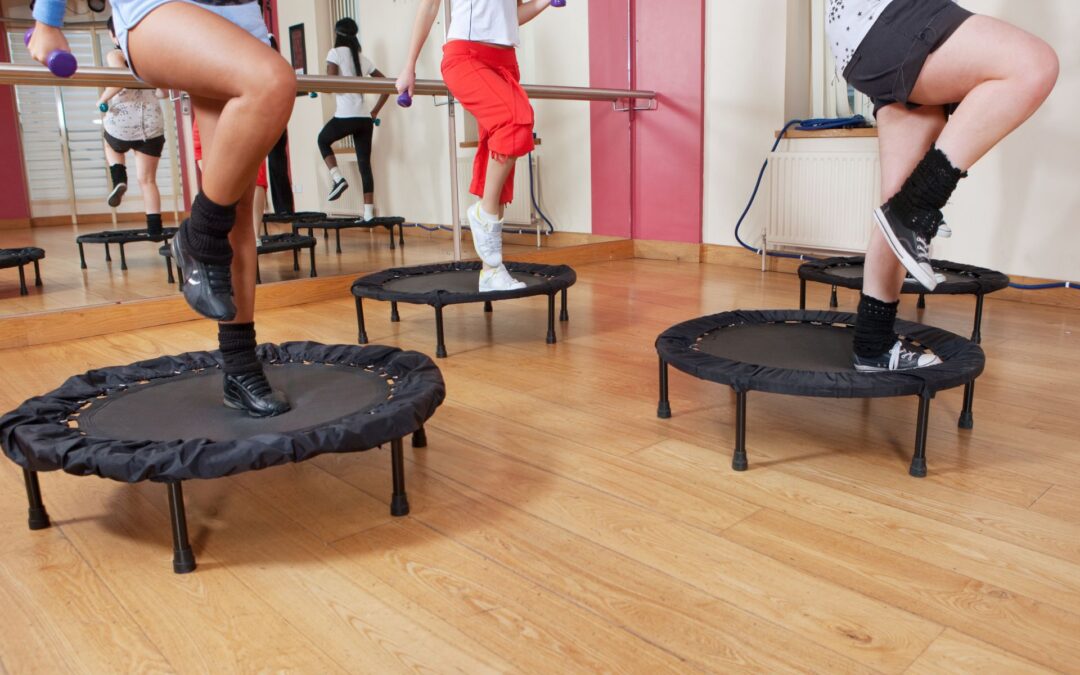
Like many people, I sometimes struggle to fit as much exercise as I would like, into a busy week. I am always looking for realistic and sustainable ways to stay active, so I have been intrigued by rebounding. The idea of a short workout at home that could support my fitness, balance and overall health sounded appealing. However, rather than relying on social media claims, I wanted to check out the research and see what the science actually says about this fun exercise. So, alongside my regular walking and weight training, I decided to give rebounding a try!
If you are not familiar with it, rebounding involves exercising on a small trampoline, often called a rebounder. It has become increasingly popular, with claims ranging from improved fitness and balance to stronger bones and even “detoxification”. Read on to find out which of these claims the science supports, and there are links to the studies at the end of the article.
What Is Rebounding?
Rebounding is a form of low-impact exercise performed on a mini-trampoline. Sessions can include gentle bouncing, marching, jogging, jumping or following structured workout routines. One of the reasons why it appeals to many people, is that it feels easier on the joints than activities such as running, while still providing a cardiovascular workout.
Potential Benefits of Rebounding
1. It Can Improve Cardiovascular Fitness
Research suggests that rebounding can provide moderate to vigorous aerobic exercise, meaning it can challenge the heart and lungs in a similar way to other forms of cardio. Studies have shown improvements in cardiovascular fitness, increased heart rate response and higher energy expenditure during rebounding sessions. Potential benefits include:
- Improved aerobic fitness
- Increased calorie expenditure
- A convenient indoor cardio option
- Lower perceived impact compared with running
On days when the weather is poor or time is limited, a rebounder can be a practical way to fit some movement into our day.
2. It May Improve Balance and Coordination
One of the strongest areas of evidence for rebounding relates to balance and mobility. Because the surface is constantly moving, your body has to make small adjustments to maintain stability. This challenges the muscles and nervous system responsible for balance and coordination. Research suggests rebounding may help to:
- Improve balance
- Enhance body awareness (proprioception)
- Support mobility
- Reduce fall risk in some populations
This could be particularly valuable as we age, when maintaining balance becomes increasingly important for independence and quality of life.
3. It May Support Strength and Functional Fitness
A study involving older women with osteopenia found that a 12-week mini-trampoline programme improved:
- Balance
- Walking speed
- Functional mobility
- Upper body strength
- Lower body strength
- Confidence in movement and reduced fear of falling
Although rebounding shouldn’t replace resistance training, it may offer another way to challenge muscles and maintain physical function.
4. Bone Health: Promising but Not Proven
Many rebounder manufacturers claim that rebounding can build bone density or even reverse osteoporosis. The scientific evidence is more cautious. Some studies have reported positive effects on bone-related measures, particularly in the hip region. However, the improvements observed have generally been modest, and larger long-term studies are still needed. At present, there is not enough evidence to conclude that rebounding reverses osteoporosis or significantly improves bone density across all populations.
For bone health, the strongest evidence still supports a combination of resistance training, weight-bearing activity and adequate nutrition. However, with more studies being carried out, the “promising” may become “proven” and as it is good for other aspects of health, I am hoping that it might help my bones too.
5. People Tend to Enjoy It
This might sound less important than some of the other benefits, but enjoyment matters. The best exercise programme is often the one you actually stick with. Many people find rebounding fun, accessible and less repetitive than other forms of cardio. Research in rehabilitation settings also suggests that participants often find it engaging, which may help improve long-term adherence. I do 10-20 minute sessions and with some of my “tunes” on, I enjoy it. It leaves me feeling more energetic and gets the blood flowing!
Potential Drawbacks and Risks
1. There Is a Risk of Falls
Although mini-trampolines are generally safer than large recreational trampolines, injuries can still occur, so of course we need to be mindful of safety and also consider if rebounding is appropriate for us. Potential risks include:
- Falls
- Ankle sprains
- Loss of balance
- Wrist injuries from trying to break a fall
Anyone with balance concerns should start cautiously and consider using a support bar or positioning the rebounder near a wall for extra stability.
2. It Is Not Suitable for Everyone
Rebounding may not be appropriate without medical advice for people with:
- Severe osteoporosis
- Recent fractures
- Significant balance or vestibular disorders
- Uncontrolled cardiovascular conditions
- Certain neurological conditions
If you have a medical condition or any concerns, speak with your healthcare professional before starting.
3. The Research Base Is Still Relatively Small
While the evidence for rebounding is encouraging, it is worth remembering that it is much smaller than the evidence supporting walking, cycling, strength training and other traditional forms of exercise. Many rebounding studies:
- Have small participant numbers
- Are relatively short in duration
- Focus on specific populations
- Use different exercise protocols
As a result, more research is needed before stronger conclusions can be made.
Be Wary of Overblown Claims
One thing I noticed while researching rebounding is that some of the marketing claims are far stronger than the available evidence. Currently, there is little strong scientific evidence to support claims that rebounding:
- “Detoxifies” the body
- Dramatically boosts immune function
- Cleanses the lymphatic system
- Reverses ageing
- Reverses osteoporosis
- Is superior to all other forms of exercise
That doesn’t mean rebounding is not beneficial. It simply means we should be careful not to confuse marketing messages with scientific evidence.
Summary
After reviewing the research, I think that rebounding sits in a sensible middle ground. It is not a miracle exercise, but it does appear to offer genuine benefits for cardiovascular fitness, balance, mobility and overall physical function. It may also be an excellent option for people who find running uncomfortable or simply want a convenient indoor workout. Personally, I see rebounding as a useful addition to a balanced activity programme, rather than a replacement for other forms of movement. If you enjoy it and it helps you move more consistently, that is already a significant win for your health.
Tips for Getting Started
If you are new to rebounding:
- Start with gentle bouncing or marching on the spot.
- Begin with short sessions of 5 to 10 minutes.
- Progress gradually as your confidence and fitness improve.
- Use a support bar or wall if balance is a concern.
- Stop if you experience dizziness, pain or instability.
Remember, the goal isn’t perfection. The goal is finding enjoyable ways to move your body more often. Rebounding isn’t magic, but it may be a useful tool alongside walking, strength training, good nutrition, sleep and other healthy habits.
This article is intended for educational purposes only and should not be considered medical advice. Always consult a qualified healthcare professional before beginning a new exercise programme, particularly if you have an existing medical condition or injury
Sources
Rodrigues AN, Perez AJ, Carletti L, et al. Effects of Trampoline Exercise Training on the Cardiovascular System: A Systematic Review. Biology of Sport. 2018. https://pmc.ncbi.nlm.nih.gov/articles/PMC6358523/
Okemuo AJ, Akinremi AA, Edeh HC, et al. Impact of Rebound Exercise on Balance and Mobility in Neurological Disorders: A Systematic Review and Meta-analysis. PLOS ONE. 2023. https://pmc.ncbi.nlm.nih.gov/articles/PMC10553300/
Posch M, Crevenna R, Riedl M, et al. Effect of Whole-Body Vibration and Mini-Trampoline Training on Functional Performance, Balance and Bone Mineral Density in Women with Osteopenia. Clinical Interventions in Aging. 2019. https://pmc.ncbi.nlm.nih.gov/articles/PMC6929928/
Rathi S, Gupta S, Kumar R, et al. Rebounding Exercises in Rehabilitation: A Scoping Review. Cureus. 2024. https://www.cureus.com/articles/267186-rebounding-exercises-in-rehabilitation-a-scoping-review
Photo by Canva